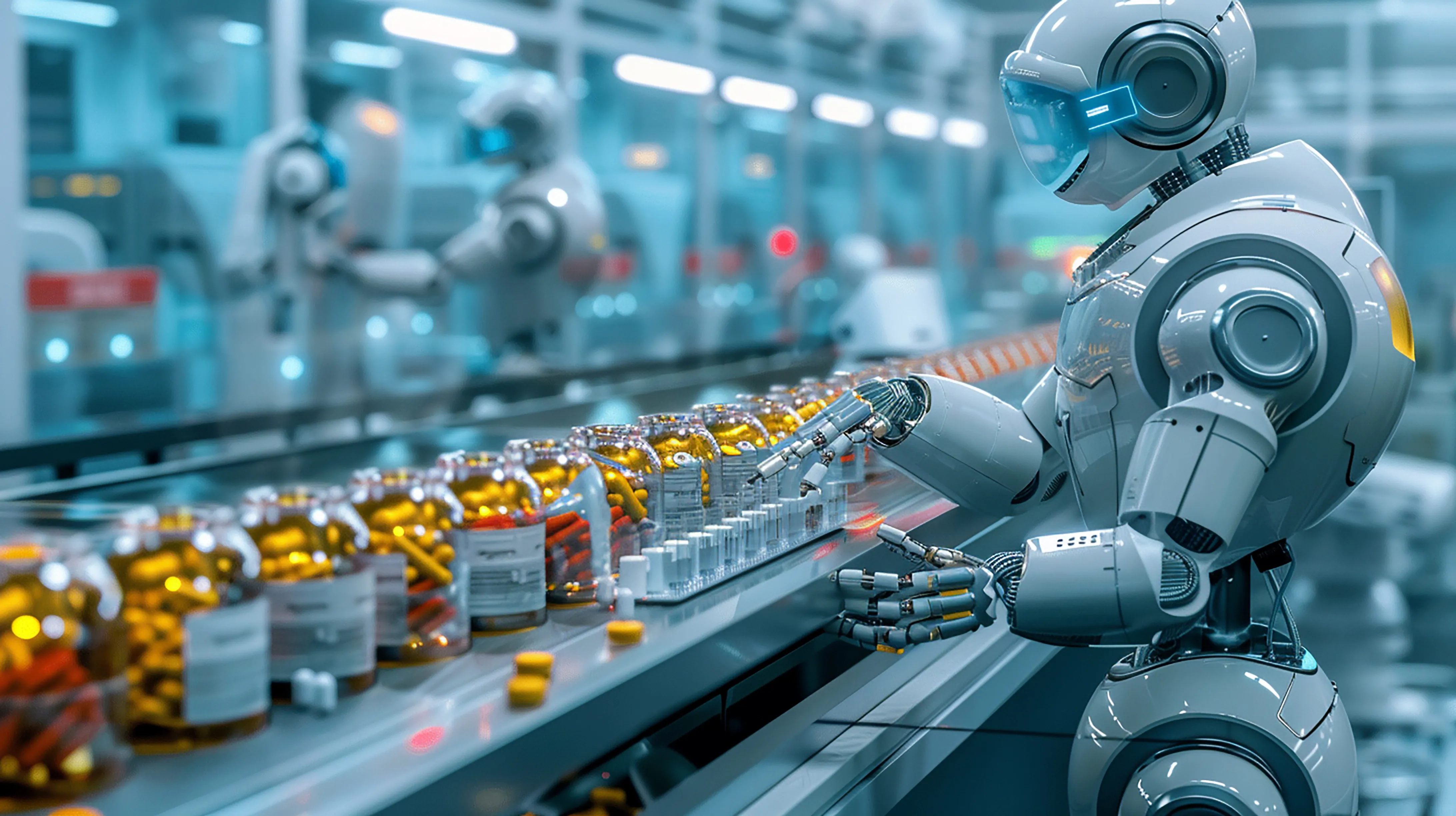
Pharmaceutical businesses are quickly implementing intelligent technology to improve the entire packaging lifecycle as demand for customized medications increases, supply chains get more intricate, and regulatory scrutiny increases. To support this, the Pharma Packaging & Labelling Forum organized by World BI brings together suppliers and manufacturers, enabling them to find the ideal partners for their packaging and labelling needs.
The Reasons AI in Pharma Packaging is Changing the Sector
Historically, pharmaceutical packaging has been labor-intensive and subject to strict regulations, making businesses susceptible to expensive mistakes, sluggish procedures, and poor supply chain visibility.
These issues are now resolved by AI-powered automation through:
- Cutting down on manual steps
- Improving accuracy and quality
- Foreseeing problems before they arise
- Increasing adherence
- Ensuring patient safety by using tamper-proof designs and proper labelling
Consequently, next-generation packing halls are starting to rely heavily on AI-driven technologies.
Key Trends Driving AI Adoption in Pharma Packaging
Intelligent Vision Systems for Complete Quality Inspection
AI-powered vision systems can now identify:
- Microscopic flaws in packaging; incorrect serialization codes; misprinted labels or design variations,foreign particles and damaged blister cavities
- Because AI learns and develops, accuracy rises with each inspection, unlike classical machine vision.
- Near-zero error rates and improved compliance, particularly with EU MDR and FDA requirements, are the outcomes.
Predictive Upkeep for Packaging Equipment
One of the main causes of expenses in packing processes is downtime.
Predictive Maintenance Tools Driven by AI Examine:
- Patterns of motor vibration
- Variations in temperature
- Variations in machine speed
- Wear and tear on tools
Pharmaceutical Businesses That Anticipate Failures Before They Happen Can:
- Cut downtime by up to 50%
- Boost OEE (Overall Equipment Effectiveness)
- Reduce maintenance expenses dramatically.
- Packaging lines become proactive workflows instead of reactive ones as a result
AI-Powered Label and Artwork Management
A significant percentage of pharmaceutical recalls worldwide are caused by labelling errors.
The entire lifecycle of artwork is automated by AI through:
- Comparing several versions of artwork
- Noting discrepancies
- Ensuring accurate regulatory data
- Language translations that automatically update
- Verifying QR codes and barcodes
AI guarantees speed, precision, and robust regulatory alignment for multinational pharmaceutical businesses managing thousands of SKUs.
Automation in Anti-Counterfeiting & Serialization
AI offers intelligent serialization and track-and-trace capabilities to counteract the growing issue of counterfeit medications.
Businesses that use AI and machine learning benefit from:
- Real-time monitoring of compliance
- Smart barcode validation
- Automated grouping
- Traceability from end to end
- Finding anomalies in the supply chain
This guarantees that every product, from manufacturing to patient delivery, is genuine, secure, and verifiable.
Packaging Line Automation with Robotics
Robots, or collaborative robots, are revolutionizing packaging operations by automating:
- Carton-based
- Palletization
- Discharging labels
- Blister closure
- Pick-and-place activities
Robots are ideal for small-batch manufacturing because they are adaptable, safe to work with humans, and require little space.
AI-Powered Customized Packaging
Packaging is becoming increasingly important in the rapidly growing field of patient-centric healthcare.AI makes possible:
- Personalized dose labelling
- Packaging that adapts to the demands of patients
- Reminders for smart packaging (IoT + AI)
- Apps that are digital companions for medication adherence
This customized strategy is starting to revolutionize clinical trials and the management of chronic diseases.
Use of AI in Pharmaceutical Packaging in the Real World
The most significant uses observed in international pharmaceutical operations are as follows:
Automated Clearance of Lines:
AI reduces human error and changeover time by scanning lines and verifying clearance prior to the subsequent batch.
Clever Label Verification:
AI verifies each component of a label for compliance, including font size and layout logic.
Packaging Run Demand Forecasting:
AI forecasts future packaging needs using supply chain trends, seasonality, and historical data.
Digitization of Batch Records:
AI improves documentation accuracy and speed by doing away with the requirement for paper-based batch records.
Clever Packaging to Engage Patients:
Digital interfaces, NFC tags, and sensors monitor usage patterns and promote adherence.
Challenges & Considerations in AI Adoption
- Companies that are undergoing transition frequently encounter high initial cost of technology, resistance to antiquated equipment, gaps in expertise for integrating AI concerns about data security and privacy.
- Nonetheless, the majority of pharmaceutical executives concur that the long-term ROI greatly exceeds the initial difficulties, making the use of AI a strategic need.
Prospects for the Future: How Will AI Affect Pharma Packaging?
Pharmaceutical packaging will transition from automation to hyper-automation during the next five years, combining:
- Robotics and AI
- IoT-based intelligent packaging
- Supply chain visibility in real-time
- Digital twins for designing packaging
- Self-sufficient inspection systems
Future packaging lines will be completely integrated across production, quality assurance, and distribution, self-learning, and self-optimizing.
World BI Pharma Packaging & Labelling Forum, 2026
AI in pharmaceutical packaging is a reality today, not just a vision of the future. Faster time-to-market, improved compliance, lower operating costs, more customer trust, and a distinct competitive edge in a sector that is becoming more and more demanding are all benefits that companies who adopt intelligent automation today enjoy. AI continues to emerge as the key factor influencing the future of pharmaceutical packaging as the industry moves toward intelligent, sustainable, and patient-centric packaging. Exclusive gatherings are organized by the Pharma Packaging and Labelling Conference, which provides a platform for distinguished leaders, Artwork Professionals, and Industry experts from different companies to come together with the common goal of promoting worldwide knowledge.
For more information, kindly visit World BI.