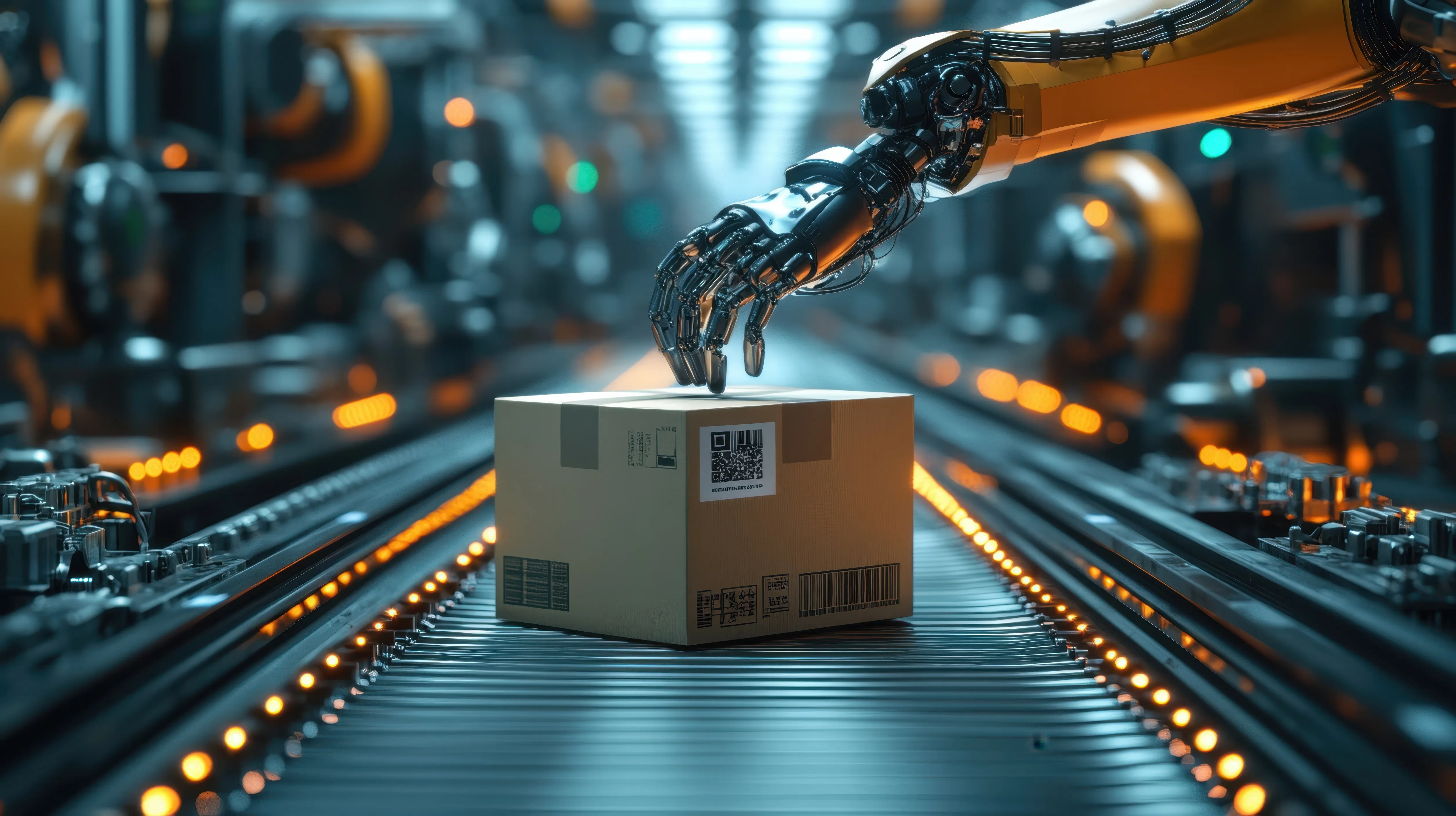
The quality of the packaging is equally as important in the pharmaceutical sector as the medication itself. Regulatory fines, product recalls, supply chain interruptions, and above all dangers to patient safety might arise from a mislabeled carton, an unreadable barcode, a missing patient information leaflet, or an inadequately sealed blister pack. As pharmaceutical goods become more sophisticated and regulatory expectations continue to evolve, manufacturers are under increasing pressure to guarantee every package leaving the production line satisfies the highest quality standards. Artificial Intelligence (AI) has become a revolutionary tool for pharmaceutical packaging quality monitoring in 2027. Pharmaceutical businesses are implementing AI-driven inspection platforms that can detect flaws in real time with exceptional accuracy instead of depending just on manual inspections and conventional machine vision systems. Manufacturers are benefiting from these intelligent solutions by reducing waste, eliminating human mistake, increasing operational efficiency, and maintaining compliance with international norms. To that end, World BI organizes Pharma Packaging & Labelling conferences that bring together suppliers and manufacturers, enabling them to choose the best partner to meet the right partner for their packaging and Labelling needs.
Why Traditional Packaging Quality Control Faces New Challenges?
- Historically, pharmaceutical packaging quality relied on human inspectors supported by conventional vision systems.
- While these methods have served the industry for decades, they present several limitations in today's high-speed manufacturing environment.
- Manual inspection is naturally affected by fatigue, repetitive tasks, and subjective decision-making.
- Even highly trained operators can overlook small defects after inspecting thousands of packages during a production shift.
- Traditional rule-based vision systems also struggle when packaging designs, artwork, lighting conditions, or product formats change frequently.
- Pharmaceutical businesses are simultaneously manufacturing more customized medications, smaller batch sizes, and packaging that varies by area.
- Manual inspection procedures are finding it more and more challenging to keep up with the ever-increasing speed of packaging lines.
- These difficulties have sped up the deployment of AI-powered quality control systems that can reliably and consistently inspect each shipment.
What is AI-Powered Packaging Quality Control?
- Pharmaceutical packaging is inspected throughout the production process using AI-powered packaging quality control, which integrates machine vision, deep learning algorithms, advanced imaging systems, predictive analytics, and industrial automation.
- Unlike traditional inspection systems that rely on predetermined standards, AI learns by examining thousands or even millions of packaging photos.
- As the system processes more data, it continuously improves its capacity to discriminate between acceptable product changes and real problems.
- Modern AI inspection systems can analyze packaging in milliseconds, allowing firms to verify every product without slowing down production.
- These clever devices connect effortlessly into current packaging lines and continuously check quality while creating digital inspection records for regulatory compliance.
Typical Packaging Flaws AI Can Identify
One of AI's major capabilities is its ability to recognize numerous fault types concurrently.
Inspection systems driven by AI are able to identify:
- Inaccurate or missing labels.
- Barcode and Data Matrix printing errors.
- Serialization verification failures.
- Absence of patient information pamphlets.
- Blister packs that are damaged.
- Tamper-evident seals that are broken.
- Absence of closures or caps.
- Incorrect construction of the carton.
- Faded or smudged printing.
- Alignment problems with artwork.
- Color inconsistencies.
- Contamination of packaging.
- Bottles or containers with cracks.
- Incorrect package dimensions.
Compared to random sampling or manual visual checks, producers obtain much greater inspection coverage since AI assesses each package separately.
Machine Vision and Deep Learning: The Foundation of Smart Inspection
- High-speed industrial cameras that can take thousands of pictures per minute are used in modern pharmaceutical packaging plants.
- Deep learning algorithms that have been trained to identify both a variety of potential flaws and acceptable packaging conditions are used to process these photos.
- AI continuously enhances its performance through continuous learning, in contrast to traditional vision software that adheres to set programming principles.
- Because of this, it can spot minute irregularities that conventional systems would frequently overlook.
- AI, for instance, is able to discern between significant labelling errors that necessitate prompt rejection and minor cosmetic differences that have no effect on product quality.
- This lowers needless product waste while upholding high standards of quality.
- Faster inspection, increased consistency, and fewer false rejects are the outcomes.
Manufacturing is Changing Due to Predictive Quality Control
The transition from reactive quality inspection to predictive quality control is one of the biggest changes of 2027.
- AI continuously evaluates equipment performance and production trends to forecast when faults are likely to occur, as opposed to merely identifying defective packages after they happen.
- AI can identify trends that suggest a packaging machine may soon need repair by keeping an eye on variables like printing pressure, machine vibration, temperature, label alignment, sealing performance, and conveyor speed.
- Early warnings are sent to maintenance teams before flaws start to impact production.
Manufacturers benefit from this predictive approach:
Reduce downtime
Reduce unforeseen downtime.
Prevent failures
Prevent packaging failures.
Improve OEE
Improve Overall Equipment Effectiveness (OEE).
Extend equipment life
Increase the life of equipment.
Lower costs
Reduced upkeep expenses.
Supporting Data Integrity and Regulatory Compliance
Pharmaceutical firms continue to invest in AI-powered quality inspection primarily for regulatory compliance.Health regulators globally want firms to exhibit total control over packaging activities while keeping correct documentation and traceability.
AI programs facilitate compliance by producing:
- Digital recordings of inspections.
- Time-stamped photo repositories.
- Documentation for electronic batches.
- Audit-ready quality reports.
- Automated defect classification.
- Real-time production dashboards.
These digital documents increase data integrity while making regulatory inspections faster and more visible.AI gives manufacturers more assurance in fulfilling compliance standards as international laws pertaining to serialization, accurate labelling, and patient safety continue to change.
Reducing Human Error While Empowering Employees
- The idea that AI will replace human labor is a prevalent myth. In actuality, AI is designed to complement human expertise rather than eliminate it.
- QA specialists can concentrate on higher-value tasks including quality investigations, process improvement, risk assessment, supplier quality management, and regulatory readiness rather than dedicating hours to tedious visual inspections.
- Real-time warnings that assist packaging operators in spotting process variances before flaws worsen are another advantage.
- As a result, qualified professionals and intelligent automation work together more effectively, increasing productivity and producing consistently high-quality results.
The Future of AI in Pharmaceutical Packaging
AI-powered package quality monitoring will grow much more sophisticated in the future.AI will be integrated with robotics, cloud analytics, digital twins, Industrial Internet of Things (IIoT) sensors, and autonomous production systems in future packaging lines.
The following cutting-edge developments are anticipated to influence pharmaceutical packaging in the future:
- Systems for self-learning inspections.
- Explainable AI (XAI) for openness in regulations.
- Root cause analysis with AI assistance.
- Optimization of autonomous packaging lines.
- Digital twin simulation for quality prediction.
- Edge AI for ultra-fast inspection.
- AI-powered sustainability analytics.
Pharmaceutical businesses will be able to transition from defect detection to fully linked, predictive, and self-optimizing packaging operations thanks to these technologies.
Join the Conversation at Pharma Packaging & Labelling Forum 2027
Pharmaceutical manufacturing is changing thanks to AI-powered packaging quality control, which reduces human error, increases compliance, and boosts productivity. As packing lines become faster and regulatory demands grow more stringent, AI provides the intelligence needed to analyze every item with speed, consistency, and precision.For QA, Packaging, and Operations Leaders, investing in AI is no longer just about automation. It is about safeguarding patients, boosting operational performance, minimizing recalls, and establishing resilient manufacturing systems that are ready for the future.Businesses who use AI-powered quality control now will be in a better position to handle regulatory hurdles in the future and provide safer pharmaceutical products to patients worldwide. Join Pharma Packaging & Labelling Forum (PPL) 2027, where QA Directors, Packaging Experts, Artwork experts, Regulatory Professionals, Manufacturing Leaders, and technology developers will explore real-world case studies, emerging trends, and practical solutions defining the future of pharmaceutical packaging.
For more information, feel free to call, message, or email us at World BI.